Leave Blueprint — Parental Leave Planner
Helping employees plan leave before the first HR call
I designed a self-service planner that translates overlapping policy, pay, and job-protection rules into a personalized leave timeline—before an employee begins the formal HR process.
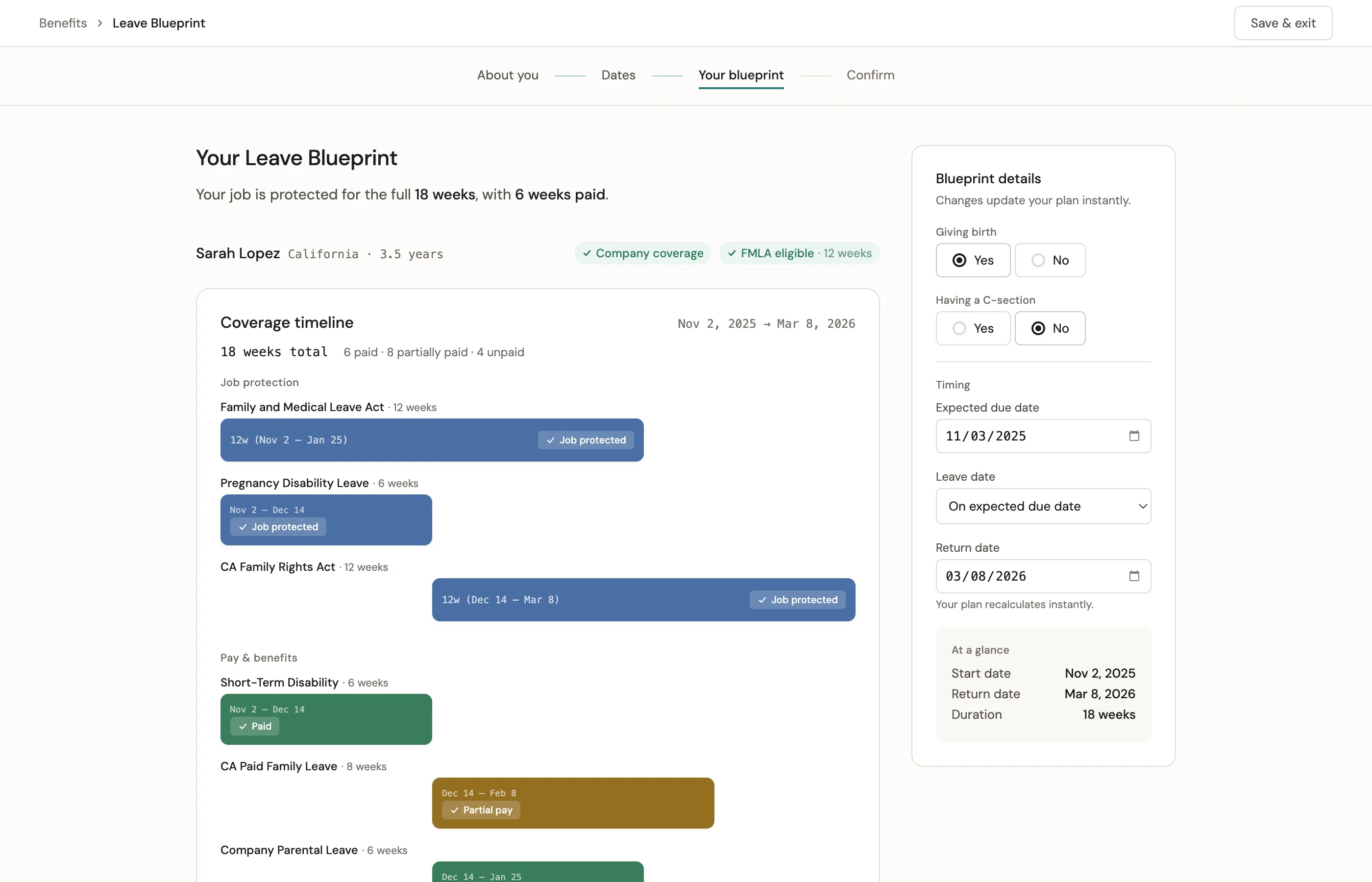
Coverage timeline — protected time, paid time, and partial pay in one view.
The planning gap
The hardest part came before the request
Formal leave systems typically begin when an employee is ready to file. But the most uncertain decisions happen earlier: determining when to take leave, how much time is available, what will be paid, and whether a job will remain protected.
Without a planning tool, employees had to assemble those answers from policy documents, date calculations, benefit information, and conversations with HR. The process was stressful, time-consuming, and easy to misunderstand.
The system had to reconcile
- Eligibility that changes based on location, tenure, company benefits, and leave type
- Paid time, partial pay, unpaid time, and job protection as separate but overlapping concepts
- Multiple leave programs that may run concurrently
- Dates that employees need to explore and revise
- A clear boundary between planning leave and formally requesting it
Opportunity
Create a self-service planning experience that gives employees a reliable view of their options while preserving a clear path into the formal HR process.
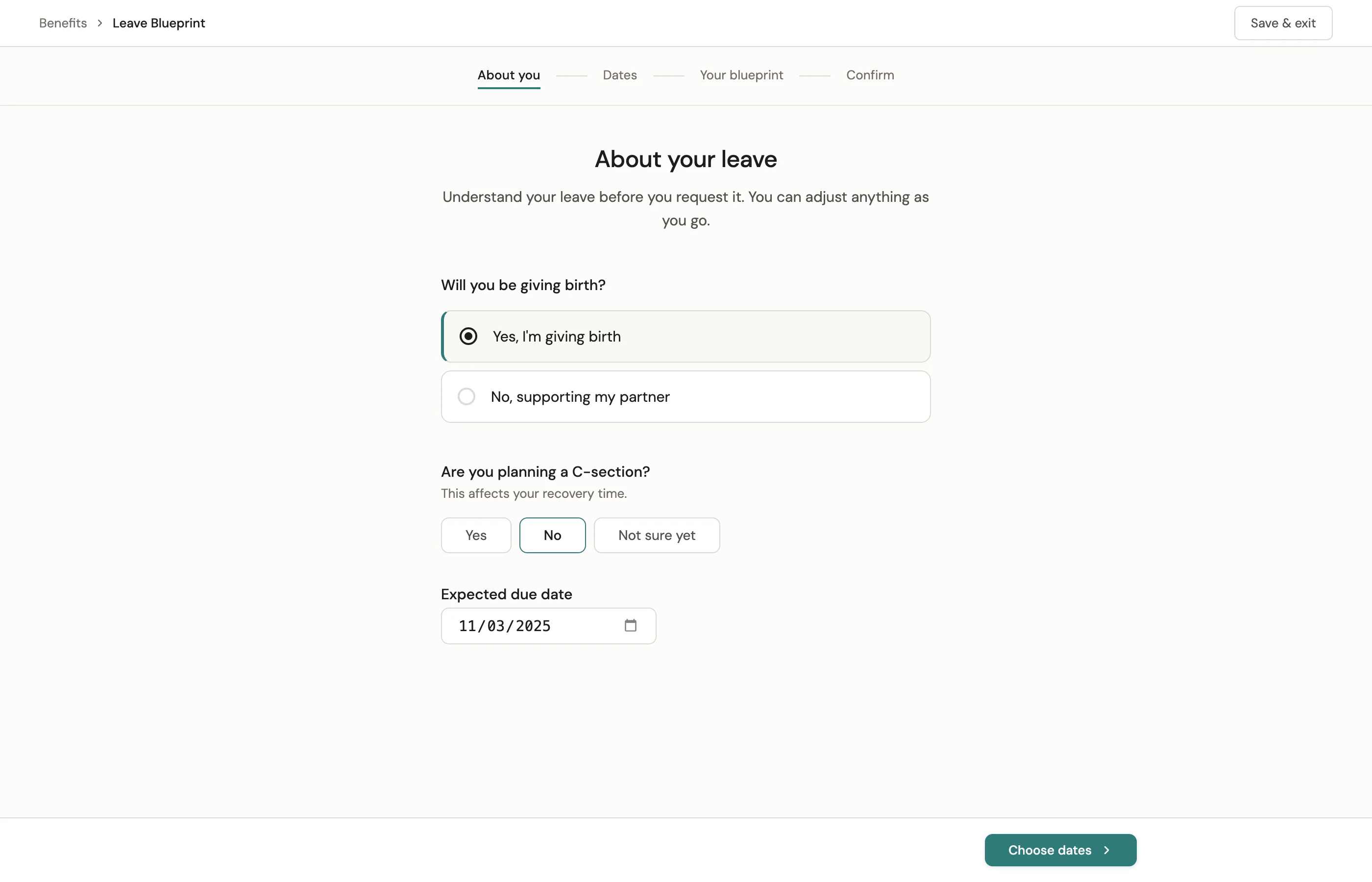
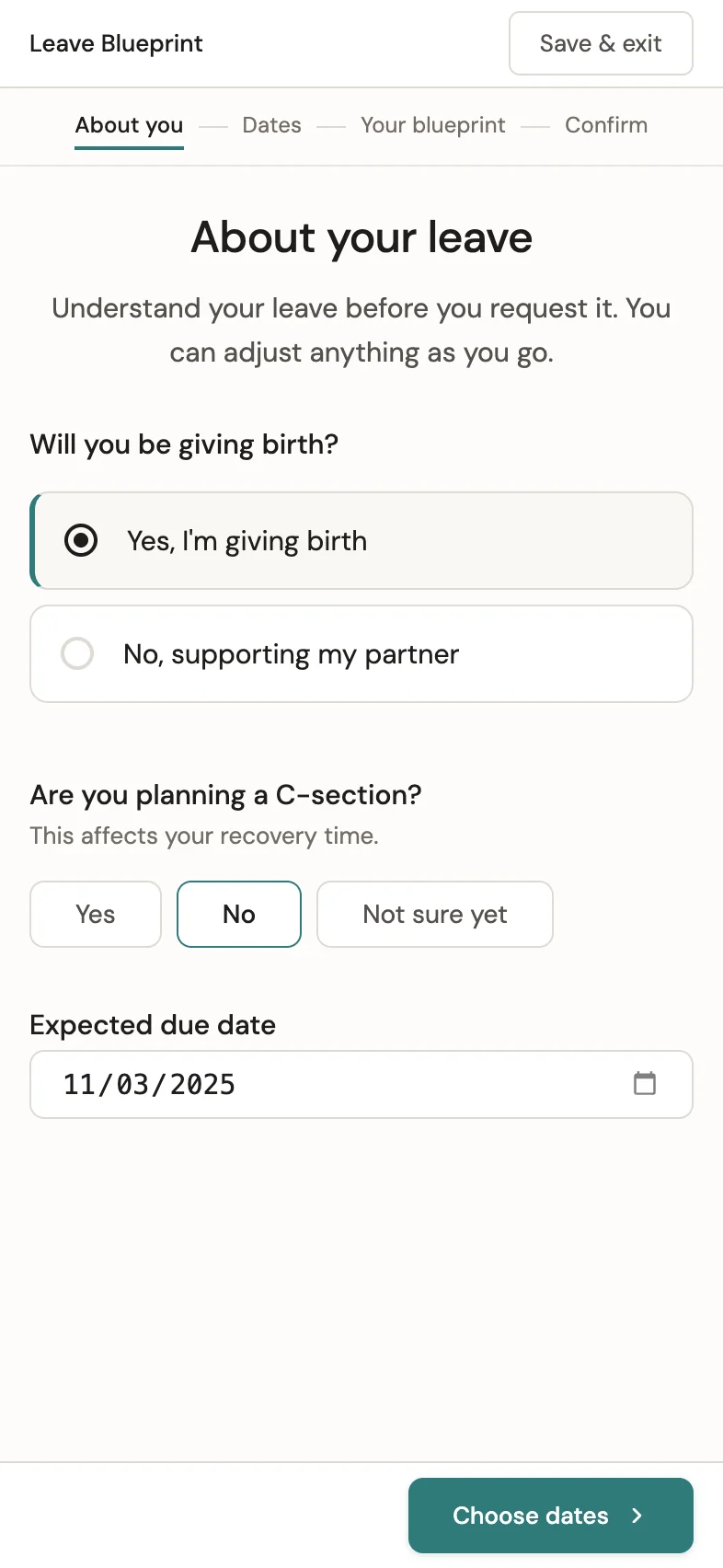
Personal context first — desktop and mobile.
Decision One: Personalization
Start with the person, not the policy
Instead of asking employees to interpret policy language, the planner began with their situation. Location, tenure, company benefits, and leave type gave the system the context needed to identify relevant programs and build a useful plan.
Why this decision mattered
Generic policy information could create false certainty. Starting with personal context allowed the experience to show information relevant to the employee rather than presenting an undifferentiated policy library.
Tradeoff
Asking personal questions early increased the initial effort. The flow therefore needed to explain why each answer mattered and allow employees to adjust their information later.
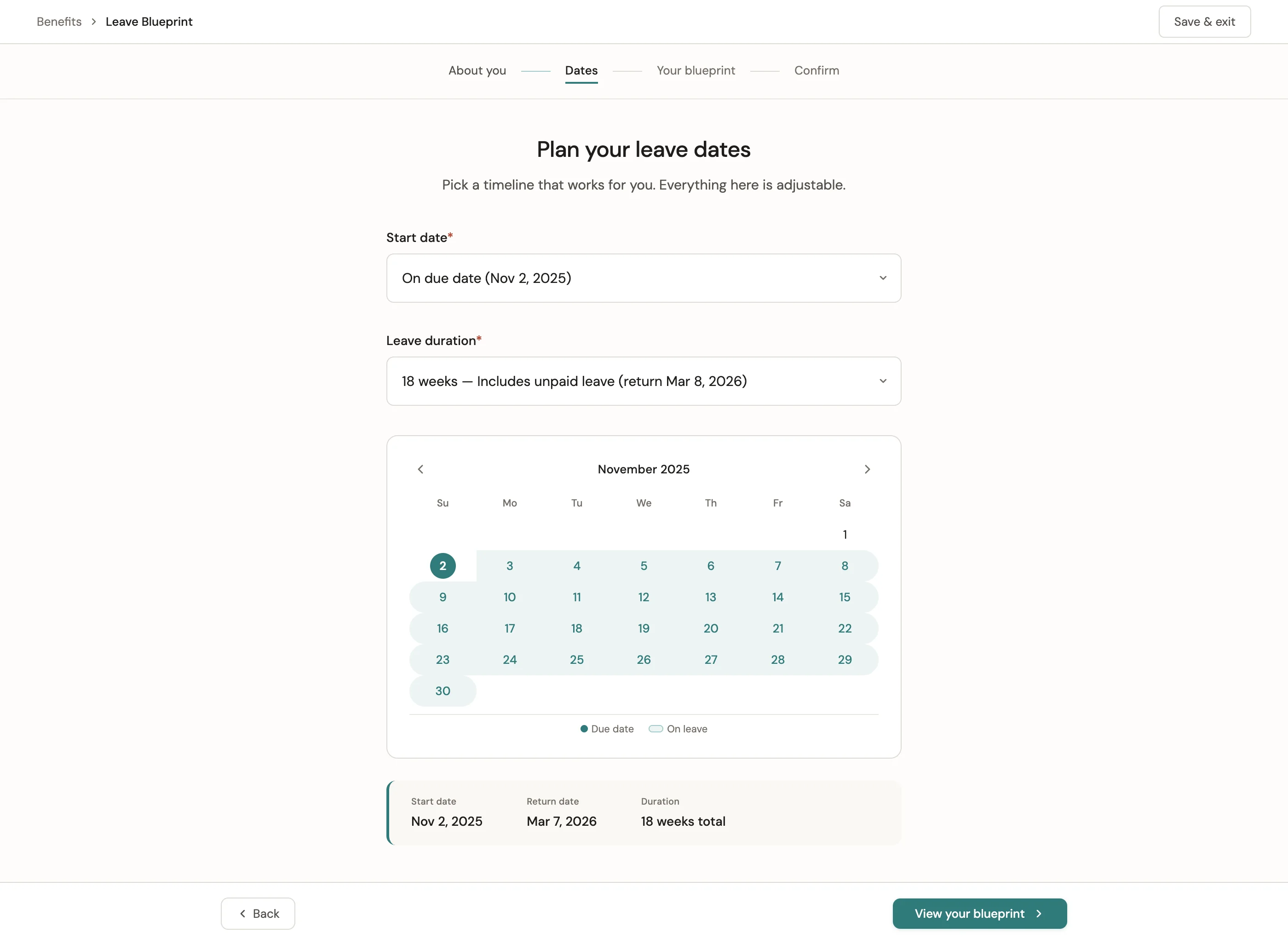
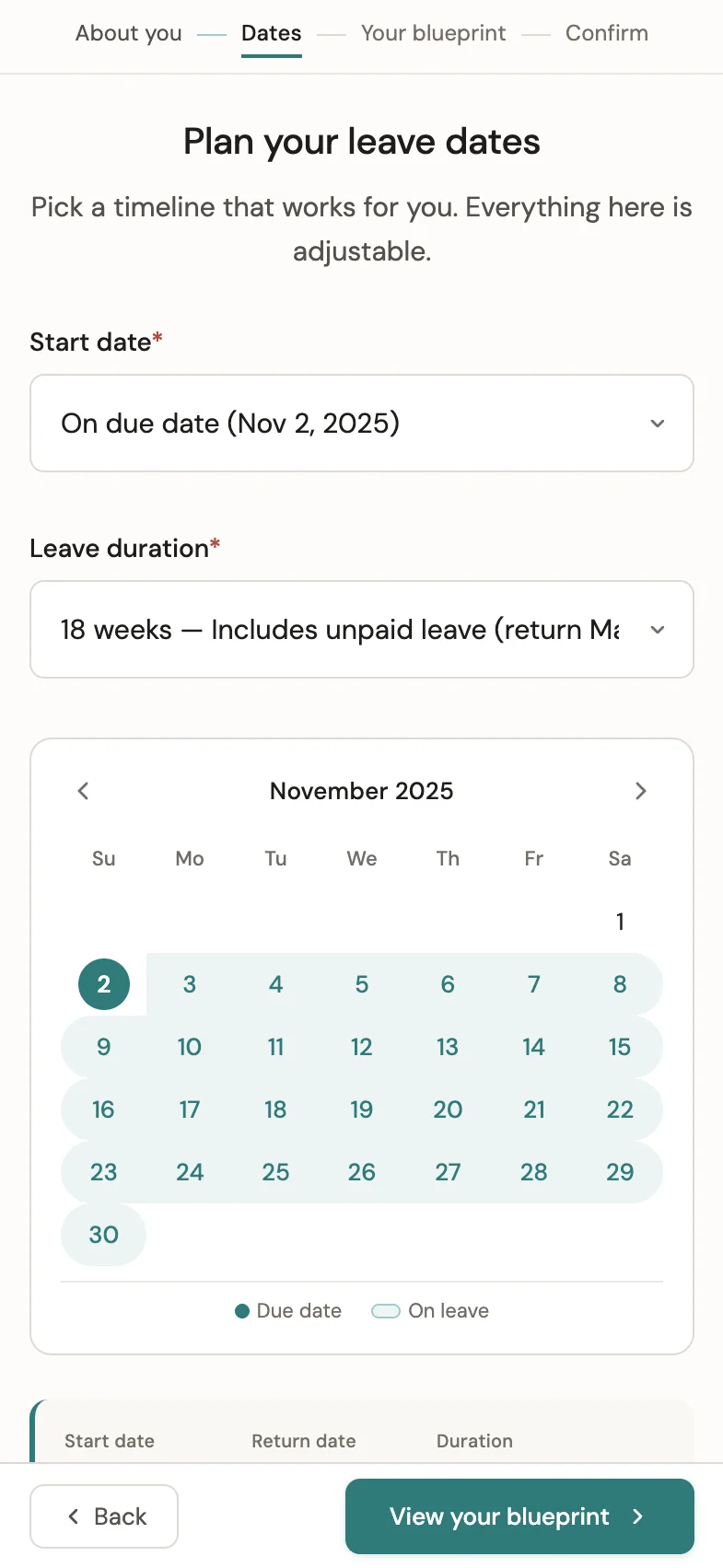
A calendar turns leave into something people can see, adjust, and plan around.
Decision Two: Time
Make time visible and adjustable
Leave becomes difficult to reason about when dates remain abstract. I designed the planner around an editable calendar so employees could see the relationship between a due date, leave duration, program coverage, and expected return date.
Why this decision mattered
Employees needed to explore different timing scenarios without manually recalculating every date.
Tradeoff
Recommended dates could be mistaken for fixed policy decisions. The interface needed to distinguish system-generated guidance from dates the employee could change.
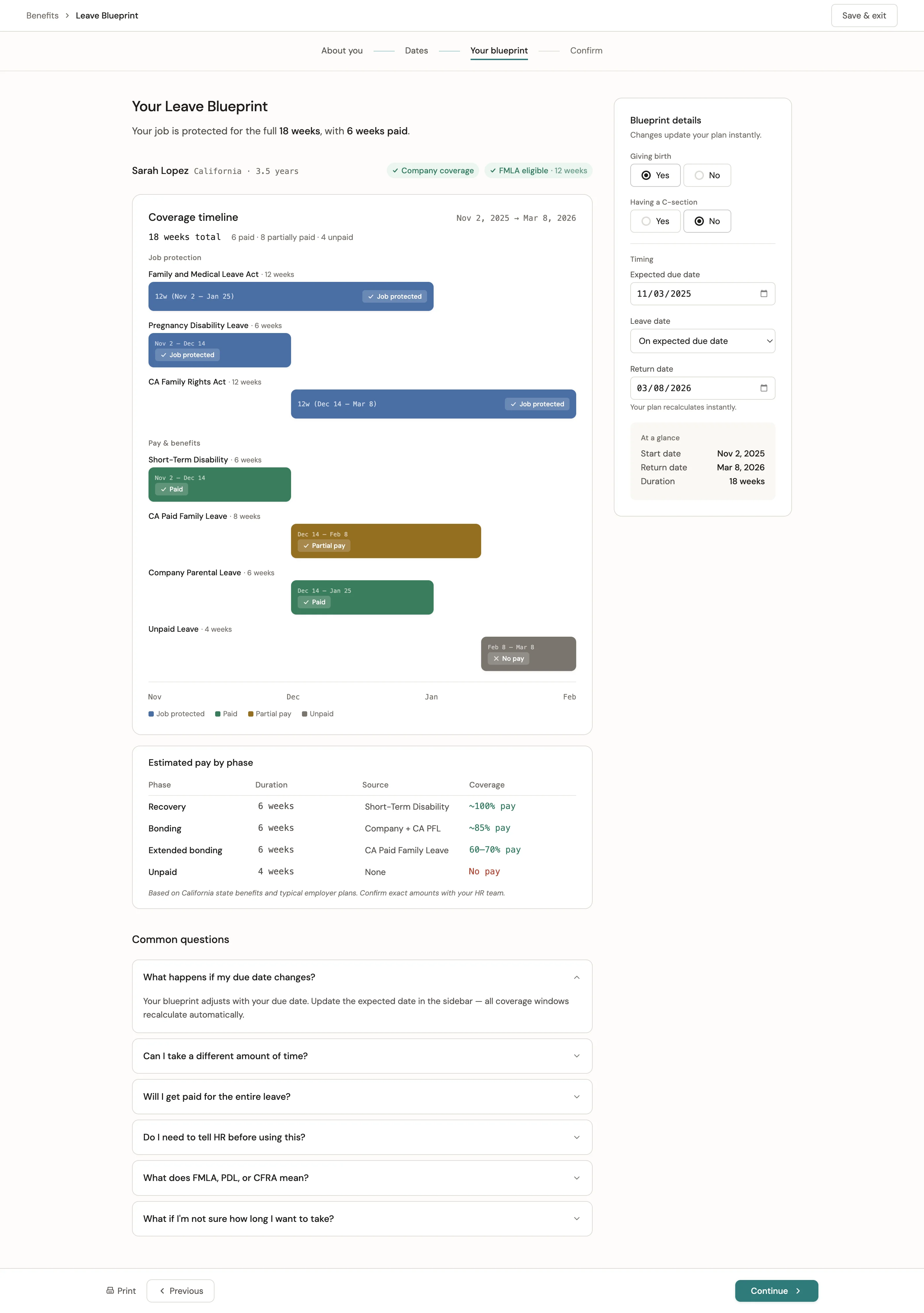
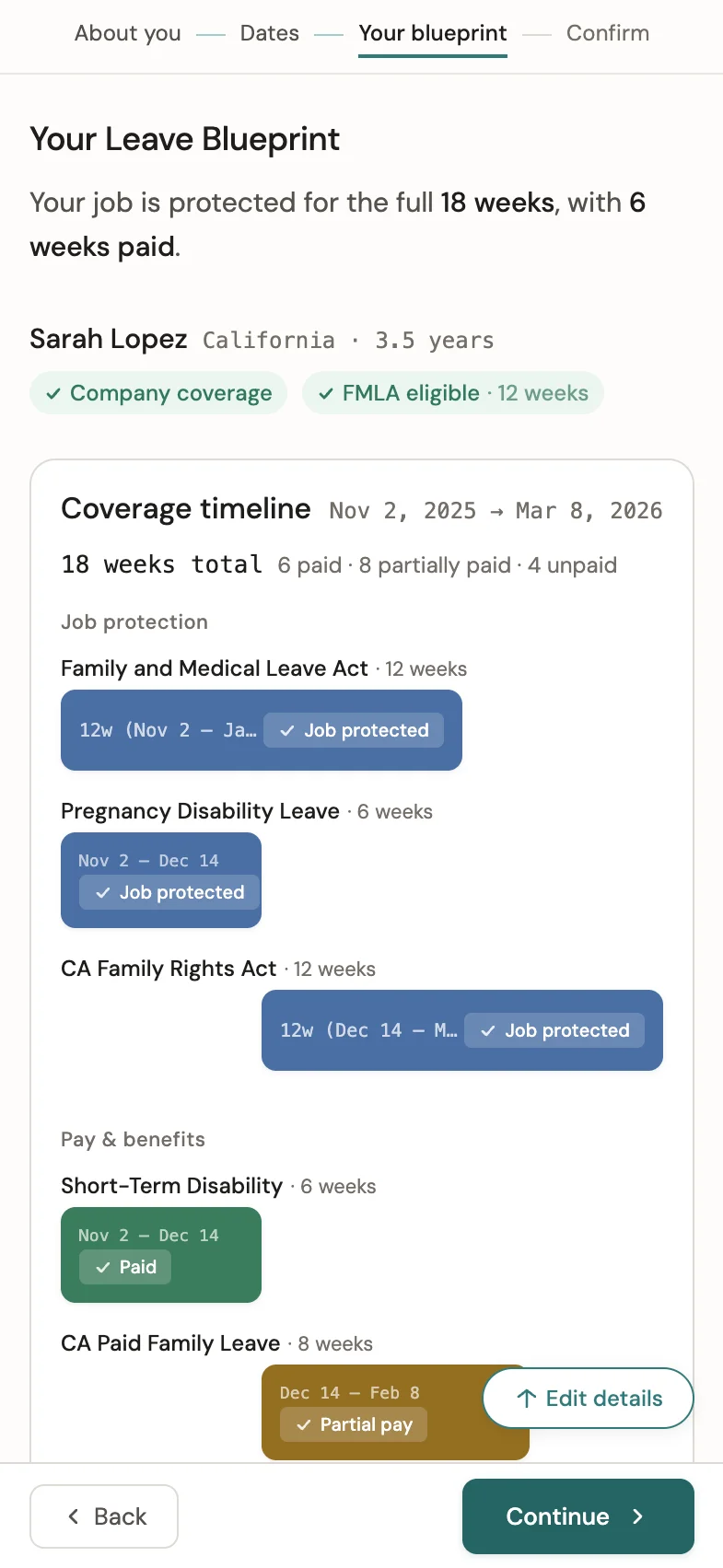
Pay, coverage, and time in one view — at every screen size.
Decision Three: Coverage
Separate pay, job protection, and time away
Paid leave and job-protected leave are related, but they are not interchangeable. I designed the blueprint to show each program independently while making overlaps visible on one timeline.
The resulting view helped employees answer three different questions:
- How long can I be away?
- Which portions of that time are paid?
- Which portions are job protected?
Why this decision mattered
Employees needed to explore different timing scenarios without manually recalculating every date.
Tradeoff
Recommended dates could be mistaken for fixed policy decisions. The interface needed to distinguish system-generated guidance from dates the employee could change.
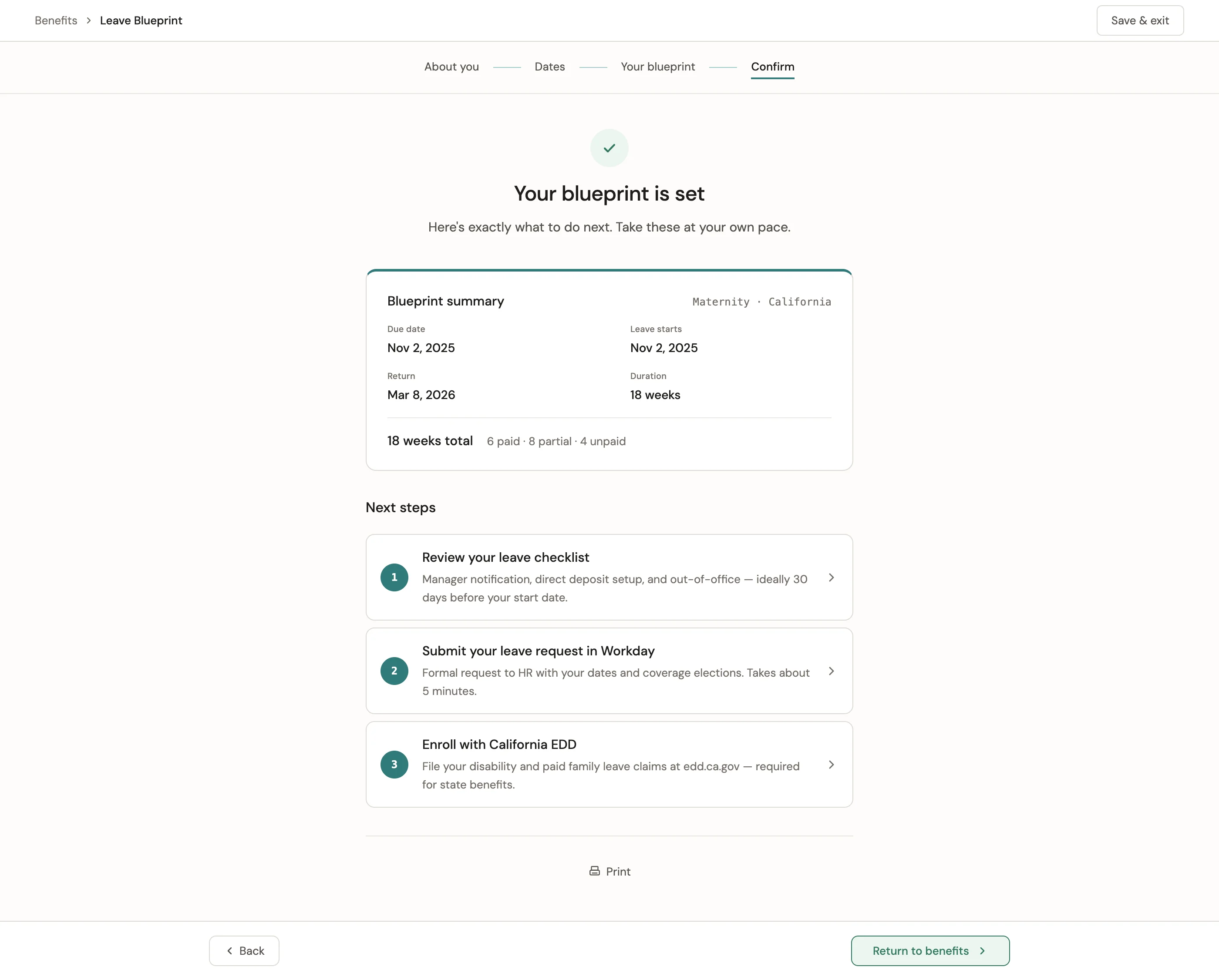
Decision Four: Handoff
End with a plan and clear next steps
The experience ended with a summary of dates, coverage, pay, and next actions. Employees could review their plan, correct details, and understand what would happen when they moved into the formal HR process.
Why this decision mattered
The planner was intended to support preparation, not replace the official request process. The final state needed to create confidence while maintaining that distinction.
Prototype Validation
Test whether the plan increased understanding and confidence
I evaluated the concept through moderated and unmoderated testing with 30 participants who are employees and internal HR SMEs. Participants used the prototype to create a leave plan and explain their understanding of pay, job protection, and next steps.
Testing indicated that employees saw value in planning leave before contacting HR and that an integrated timeline could improve confidence around dates, pay, and coverage.
70% Said they would use the tool before contacting HR.
75% Reported greater confidence after using the planner.
4.5/5 Average usefulness rating
Next